2026-10-19 · Drew Thompson
Dealing with Frozen Pipes: What to Do in Baltimore's Cold Snaps
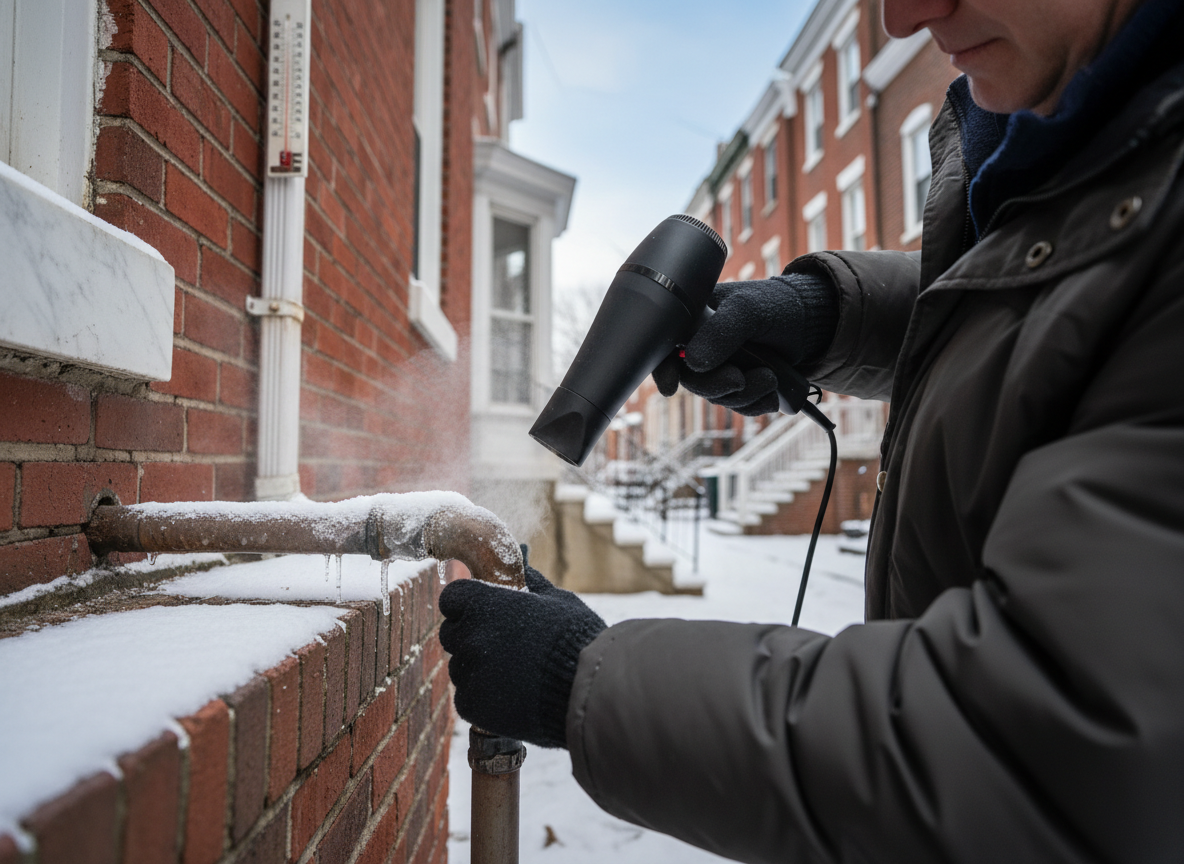
When winter temperatures drop in Baltimore, especially during those unpredictable cold snaps, frozen pipes are a real concern for homeowners across neighborhoods like Fells Point, Canton, and Federal Hill. The immediate answer to dealing with frozen pipes is to first locate the frozen section, then gently apply heat, and finally, take preventative measures to avoid future occurrences. Ignoring a frozen pipe, even for a short time, can lead to a burst pipe, resulting in extensive water damage that can cost thousands of dollars to repair, often ranging from $1,000 to $5,000 depending on the location and severity of the burst. The older housing stock common in areas like Mount Vernon and Charles Village, often built with less insulation than modern homes, makes these properties particularly vulnerable to freezing.
Identifying a Frozen Pipe
The first step in addressing a frozen pipe is accurate identification. The most obvious sign is a complete lack of water flow from a faucet, or a significantly reduced trickle, despite the main water supply being on. You might also notice a visible bulge in an exposed pipe, or even frost on its exterior, particularly in unheated areas like basements, crawl spaces, or exterior walls. Pay close attention to pipes running along exterior walls or those in uninsulated areas such as garages or under sinks near outside walls. In Baltimore's Independent City, many homes, especially in historic districts like Bolton Hill and Locust Point, have older plumbing systems that are more susceptible to freezing due to their age and material. If you hear strange noises, such as banging or gurgling, when you turn on a faucet, it could also indicate a blockage from ice.
Another indicator might be a drop in water pressure throughout your home. If only one faucet is affected, the freeze is likely localized to that specific branch line. However, if multiple fixtures are experiencing low or no water pressure, the freeze could be in a main supply line or a larger section of your home's plumbing. It's crucial to act quickly once you suspect a frozen pipe, as the pressure buildup behind an ice blockage can cause the pipe to rupture. For more insights on water pressure, you can read our article on Understanding Baltimore's Water Pressure Issues: What to Do.
Safely Thawing Frozen Pipes
Once you've identified a frozen pipe, the goal is to thaw it slowly and carefully to prevent further damage. Begin by opening the faucet associated with the frozen pipe; this allows water to flow out as the ice melts and relieves pressure. For accessible pipes, you can use a hairdryer on a low setting, a heat lamp, or even towels soaked in hot water wrapped around the pipe. Always work from the faucet end back towards the main water supply, as this allows the melting water to escape. Never use an open flame device, like a blowtorch, as this can severely damage pipes and create a significant fire hazard, especially in older homes with wooden structures.
For pipes located in hard-to-reach areas, like behind walls or under floors, increasing the ambient temperature of the room can help. Turn up your thermostat, or use a space heater in the affected area, keeping it a safe distance from any flammable materials. If you have a crawlspace, ensure it's properly sealed and consider placing a small heater there temporarily. This gradual warming approach is key to preventing a sudden burst from rapid expansion. If the pipe is still frozen after a few hours of your efforts, or if you're unsure about the location or extent of the freeze, it's always best to call a professional plumber to avoid potentially costly mistakes. Our team is available 24/7 to assist with emergencies.
Preventing Future Freezes
Prevention is always better than cure, especially with Baltimore's cool winters and humid subtropical climate. Before cold snaps hit, take proactive steps to protect your plumbing. Insulate exposed pipes in unheated areas like basements, attics, garages, and crawl spaces. Foam pipe insulation sleeves are inexpensive and easy to install. For pipes running along exterior walls, consider adding extra insulation to the wall cavity if feasible. During severe cold weather, allow a small trickle of water to run from faucets that are most susceptible to freezing, particularly those on exterior walls. This keeps water moving and reduces the chance of ice formation. This small amount of water waste is far less costly than a major repair.
Additionally, disconnect and drain outdoor hoses, and turn off and drain water from exterior spigots. Consider installing frost-proof outdoor faucets if you don't already have them. If you plan to be away during winter, set your thermostat to no lower than 55°F (13°C) to maintain a safe ambient temperature in your home. For homes in areas like Patterson Park and Reservoir Hill, which often feature diverse architectural styles and ages, understanding your home's specific vulnerabilities is crucial. If a pipe does burst despite your best efforts, immediately locate and shut off your main water supply valve to minimize water damage. You can find more information on this in our article Understanding Your Home's Main Water Shut-Off Valve in Baltimore. For immediate assistance with a Burst Pipe Repair, our team is ready to help.