2026-10-19 · Drew Thompson
Hydro-Jetting vs. Snaking: Best for Baltimore's Sewer Lines
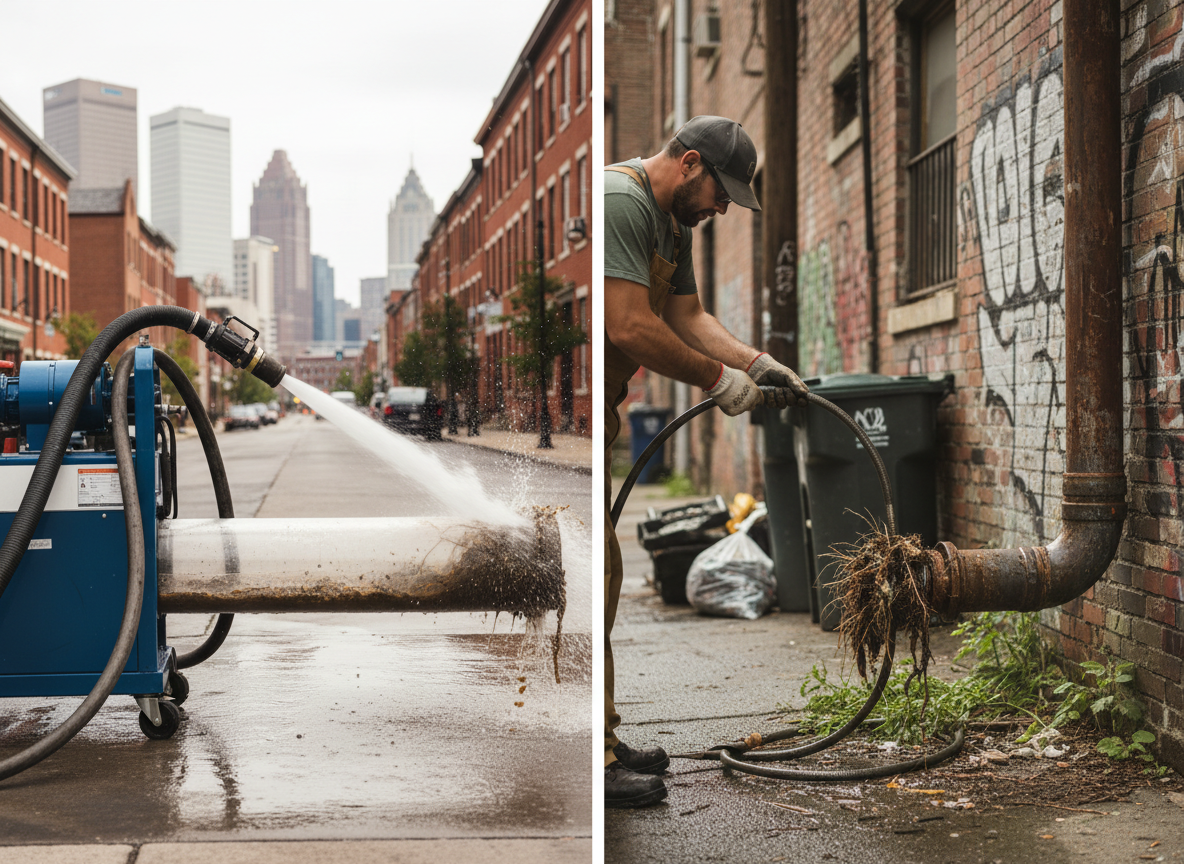
When facing a sewer line blockage in Baltimore, the question often arises: is hydro-jetting or snaking the better solution? For the typical homes across Baltimore's Independent City, including the charming, older properties in areas like Mount Vernon and Bolton Hill, hydro-jetting generally provides a superior, more comprehensive clean for persistent issues, especially those related to grease buildup and sludge. Snaking, however, remains an effective and often more cost-efficient first step for simpler clogs, such as those caused by foreign objects or minor root intrusions. The choice ultimately hinges on the nature of the blockage, the age and material of your pipes, and your budget, with hydro-jetting typically costing between $300 and $600, and snaking ranging from $150 to $450, depending on the severity and accessibility.
Understanding Sewer Line Snaking
Sewer line snaking, also known as drain cabling, is a traditional and widely used method for clearing blockages. It involves inserting a long, flexible auger into the drain opening, which then travels through the pipe to reach the obstruction. The auger's rotating head can break up, dislodge, or retrieve the clog, restoring flow. This method is particularly effective for solid obstructions like tree roots, foreign objects that have been flushed, or hard mineral deposits. Given the mature tree lines in neighborhoods like Charles Village and Hampden, root intrusion is a common issue for older sewer lines, making snaking a frequent necessity. It's a precise tool for a specific problem, often serving as a quick and effective fix for localized blockages without requiring extensive setup. For many Baltimore homeowners, snaking is the go-to solution for immediate relief from a backed-up drain or toilet.
While effective for many situations, snaking primarily creates a pathway through the blockage rather than thoroughly cleaning the pipe walls. This means that if the clog is due to a buildup of grease, soap scum, or other soft debris, snaking might not remove all the residue, allowing the clog to reform over time. This is especially true for the older cast iron or clay pipes prevalent in areas like Fells Point and Canton, which can accumulate significant buildup due to their rougher interior surfaces. For a deeper understanding of how these issues affect older homes, you might find our article on Clogged Drains in Historic Baltimore Homes: A Guide helpful. Snaking is a good first step, but it's important to understand its limitations for long-term pipe health.
The Power of Hydro-Jetting
Hydro-jetting is a more advanced and powerful method that uses high-pressure water streams to thoroughly clean the interior of your sewer lines. A specialized nozzle propels water at pressures ranging from 1,500 to 4,000 PSI (pounds per square inch), effectively scouring away grease, sludge, mineral buildup, soap scum, and even minor root systems from the pipe walls. This method doesn't just punch a hole through a clog; it cleans the entire circumference of the pipe, leaving it in a near-new condition. For Baltimore's humid subtropical climate, where hot summers can accelerate the breakdown of organic matter and cool winters can solidify grease, hydro-jetting is particularly effective at preventing recurring clogs caused by sticky residues. It's an excellent preventative measure, especially for homes in areas like Patterson Park or Locust Point, which might experience heavier usage due to larger families or older plumbing systems.
The significant advantage of hydro-jetting is its ability to provide a comprehensive clean, which can extend the lifespan of your sewer system and reduce the frequency of future blockages. It's often recommended after a camera inspection reveals significant buildup or recurring issues that snaking hasn't fully resolved. While the initial cost may be higher than snaking, the long-term benefits of preventing future plumbing emergencies can outweigh the upfront expense. For severe or recurring blockages, particularly those that impact the entire main sewer line leading to the city's system, hydro-jetting is often the recommended course of action. If you're experiencing severe issues, you might need a Sewer Line Repair specialist to assess the full scope of the problem.
When to Choose Which Method in Baltimore
Choosing between hydro-jetting and snaking largely depends on the specific nature of your sewer line problem. If you have a sudden, isolated clog caused by a foreign object, a minor root intrusion, or a simple accumulation of hair and debris, snaking is often the most appropriate and cost-effective solution. It provides immediate relief and is less invasive, making it ideal for quick fixes in residential settings throughout Baltimore, from the historic homes of Federal Hill to the newer developments on the outskirts. For example, if a child's toy has been flushed down a toilet, snaking can quickly retrieve or dislodge it without the need for high-pressure water.
However, for chronic blockages, slow drains that persist despite snaking, or issues caused by extensive grease buildup, soap scum, or significant root intrusion, hydro-jetting is the superior choice. This is especially true for older homes in neighborhoods like Reservoir Hill or Bolton Hill, where decades of use can lead to substantial accumulation within pipes. Hydro-jetting is also recommended as a preventative measure for businesses, particularly restaurants in areas like the Inner Harbor or near the National Aquarium, which deal with significant grease waste. It's an investment in the long-term health of your plumbing system, reducing the likelihood of future, more severe issues and costly emergency repairs. For comprehensive drain cleaning services, consider our Hydro Jetting or Drain Snaking services tailored to Baltimore's specific needs.
Factors Affecting Cost and Effectiveness
Several factors influence the cost and effectiveness of both hydro-jetting and snaking in Baltimore. The severity and type of the clog are primary determinants; a simple hair clog will be cheaper to clear than a major root intrusion that has completely blocked the line. The accessibility of the cleanout point also plays a role; easily accessible cleanouts reduce labor time and, thus, cost. For instance, homes with cleanouts located in basements or crawlspaces, common in older Baltimore properties, might require more effort than those with easily accessible outdoor cleanouts. The length and diameter of the pipe needing service will also impact the job, with longer or wider pipes requiring more time and specialized equipment.