2026-10-19 · Drew Thompson
Preventing Basement Flooding in Baltimore: Sump Pump Essentials
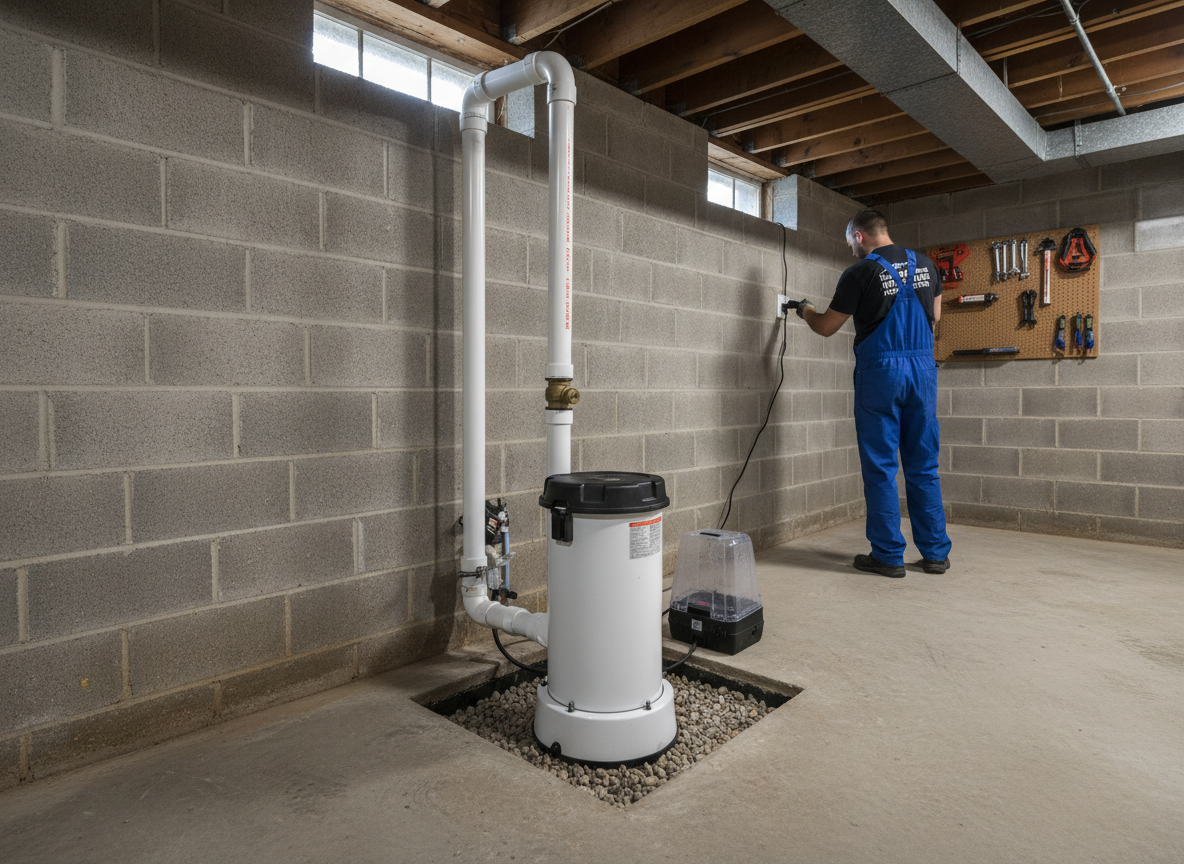
Preventing basement flooding in Baltimore hinges significantly on a properly functioning sump pump, especially given our region's humid subtropical climate, which brings hot, often rainy summers and cool, wet winters. A well-maintained sump pump can effectively remove excess groundwater that might otherwise seep into your basement, protecting your home from costly water damage, mold growth, and structural issues. In older neighborhoods like Fells Point, Canton, or Federal Hill, where homes often have basements and older foundations, a robust sump pump system isn't just a convenience; it's a necessity. We've seen firsthand how quickly a heavy rainstorm can overwhelm a neglected system, turning a minor issue into a major headache for homeowners across the Independent City of Baltimore.
Understanding Sump Pump Types for Baltimore Homes
When considering a sump pump, Baltimore homeowners typically encounter two main types: pedestal sump pumps and submersible sump pumps. Each has its advantages and disadvantages, making the choice dependent on your specific needs and basement characteristics. Pedestal pumps have the motor mounted above the sump pit, making them easier to access for maintenance and generally less expensive. However, they are noisier and take up more space, which might be a concern in finished basements. They're often suitable for homes with less frequent water issues or for those on a tighter budget.
Submersible pumps, on the other hand, are designed to operate while fully submerged in the sump pit. This makes them much quieter and less obtrusive, ideal for finished basements or homes where noise is a significant factor. They also tend to have a longer lifespan due to the cooling effect of the water on the motor. While generally more expensive upfront, their efficiency and quiet operation often justify the cost for many homeowners in areas like Mount Vernon or Charles Village, where basement spaces are often utilized for living. We often recommend submersible pumps for their reliability and discreet operation, especially in areas prone to heavier water accumulation.
Sizing Your Sump Pump: A Baltimore Perspective
Choosing the right size sump pump isn't a one-size-fits-all situation, particularly in Baltimore where factors like soil composition and historical rainfall patterns come into play. The pump's capacity is measured in gallons per hour (GPH) or horsepower (HP). For most residential basements, a 1/3 HP or 1/2 HP pump is sufficient. However, if your home is in a low-lying area, has a history of significant basement flooding, or is situated on soil with poor drainage, a more powerful 3/4 HP or even 1 HP pump might be necessary. Consider homes near Patterson Park or Locust Point, which can experience substantial runoff during heavy downpours.
It's also crucial to consider the vertical lift (the height the water needs to be pumped) and the horizontal distance to the discharge point. These factors directly impact the effective GPH output of any pump. An undersized pump will struggle to keep up during a major storm, leading to potential flooding. Conversely, an oversized pump might cycle too frequently, shortening its lifespan. Consulting with a local plumbing expert can help you accurately assess your needs and select a pump that can handle Baltimore's unique weather challenges, ensuring your basement stays dry even when the Inner Harbor is experiencing high tides.
Essential Sump Pump Maintenance for Longevity
Regular maintenance is key to ensuring your sump pump is ready when you need it most. We recommend checking your sump pump at least annually, and more frequently during rainy seasons or if your home has experienced past issues. Here are some critical maintenance steps:
- Test the pump: Pour a bucket of water into the sump pit to ensure the float switch activates the pump and it discharges water properly. The pump should turn on, remove the water, and then shut off smoothly.
- Clear the pit: Remove any debris, dirt, or gravel that may have accumulated in the sump pit. Obstructions can interfere with the float switch or clog the pump's intake, leading to failure.
- Inspect the discharge pipe: Ensure the discharge pipe is free of blockages and that the outdoor end is directed away from your foundation, ideally at least 10–20 feet away. A clogged or improperly directed discharge pipe can cause water to back up into your basement.