2026-10-19 · Drew Thompson
Water Softeners: Do You Need One in Baltimore?
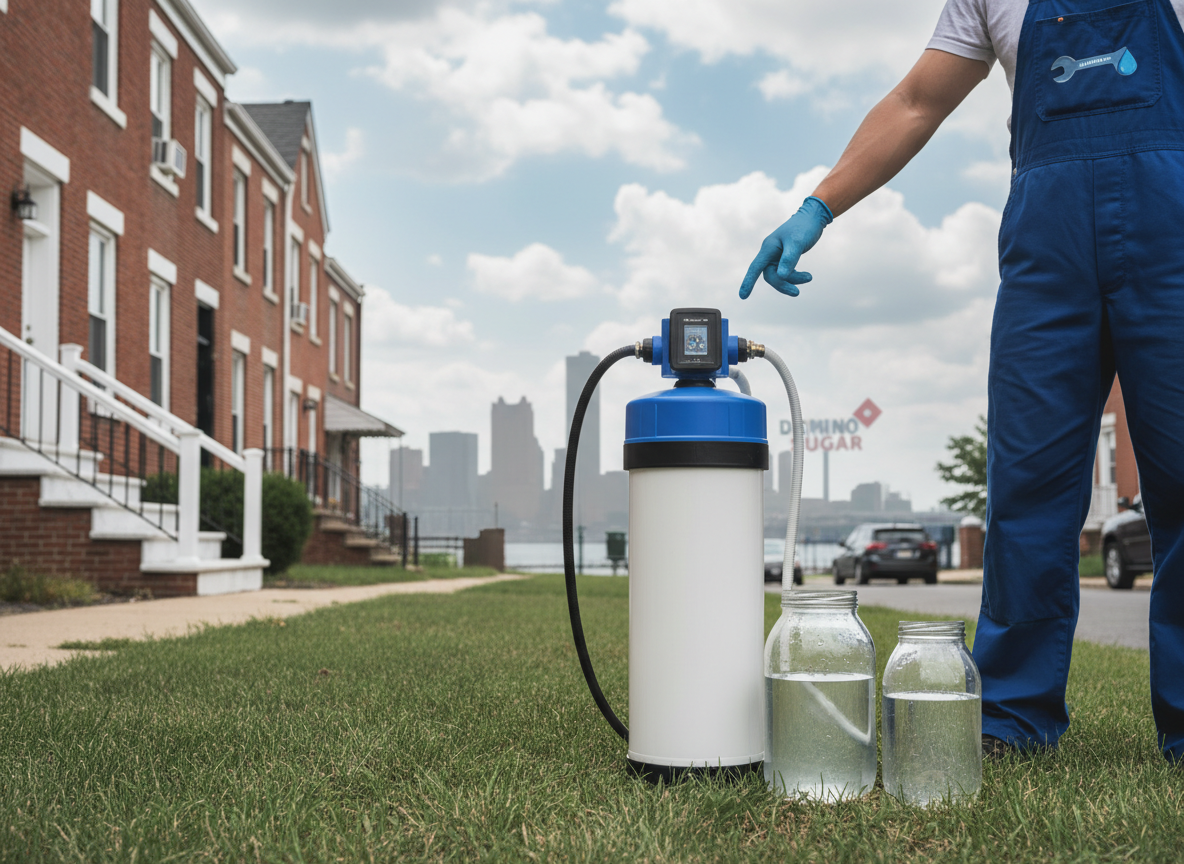
Yes, many homes in Baltimore, particularly older properties in neighborhoods like Fells Point, Canton, and Federal Hill, can significantly benefit from a water softener. While Baltimore's municipal water supply is treated and generally safe to drink, it often contains mineral levels that classify it as moderately hard. This hardness, primarily from dissolved calcium and magnesium, can lead to a host of plumbing issues and reduce the lifespan of appliances, making a water softener a valuable consideration for long-term home maintenance in the Independent City.
Understanding Hard Water in Baltimore
Baltimore's water source, primarily the Gunpowder Falls and Patapsco River, travels through various geological formations before reaching your tap. These formations, rich in minerals like limestone, contribute to the water's hardness. While not a health concern, hard water leaves behind mineral deposits, commonly known as scale, which can accumulate in pipes, water heaters, and appliances. This is particularly noticeable in older homes in areas like Mount Vernon or Bolton Hill, where plumbing systems have seen decades of use. The impact of hard water is often exacerbated by the humid subtropical climate with hot summers, which can increase water usage and thus mineral accumulation over time.
You might not realize the extent of hard water's effects until you start noticing specific signs around your home. These signs are often subtle at first but can escalate into more significant problems over time, impacting everything from your daily routine to your plumbing system's integrity. Recognizing these indicators early can help you decide if a water softener is a wise investment for your Baltimore property.
Common Signs You Have Hard Water
Identifying hard water in your Baltimore home doesn't require a lab test; you can often tell by observing everyday occurrences. One of the most obvious signs is the presence of soap scum on fixtures, shower doors, and dishes. This isn't just an aesthetic issue; it means your soaps and detergents aren't lathering effectively, leading to more product use and less cleaning power. Another key indicator is spotting on glassware and silverware after washing, even when using a dishwasher. This residue is the mineral content in the water drying and leaving its mark.
- Dull, stiff laundry: Clothes washed in hard water often feel rough and look faded. The minerals prevent detergents from working optimally, trapping dirt and leaving residue in fabrics.
- Dry skin and hair: Hard water can prevent soaps from rinsing completely, leaving a film on your skin and hair, leading to dryness, itchiness, and lack of luster.
- Reduced appliance efficiency: Appliances like dishwashers, washing machines, and especially water heaters, have to work harder when battling mineral buildup. This can lead to increased energy consumption and premature breakdown. For example, mineral scale inside your water heater can significantly reduce its efficiency and lifespan, potentially leading to issues that require [/services/water-heater-leak-repair].
- Low water pressure: Over time, mineral deposits can narrow the inside diameter of your pipes, restricting water flow and causing noticeable drops in water pressure, especially in older homes in neighborhoods like Hampden or Charles Village.
How Water Softeners Work
A water softener operates on a principle called ion exchange. As hard water enters the softener, it passes through a tank filled with resin beads. These beads are typically charged with sodium ions. When calcium and magnesium ions (the culprits behind hard water) come into contact with the resin beads, they are exchanged for the sodium ions. The softened water, now free of the hardness-causing minerals, then flows out to your home's plumbing system. Periodically, the resin beads need to be recharged or regenerated with a brine solution (saltwater) to flush out the accumulated calcium and magnesium and replenish the sodium ions. This process is usually automated and can be set to occur based on water usage or a timer.